University of Pavia
Academic work in psychology with a clinical focus and attention to care settings.
About
A profile built around training, clinical rigor, and the possibility of offering work that is both understandable and sustainable.
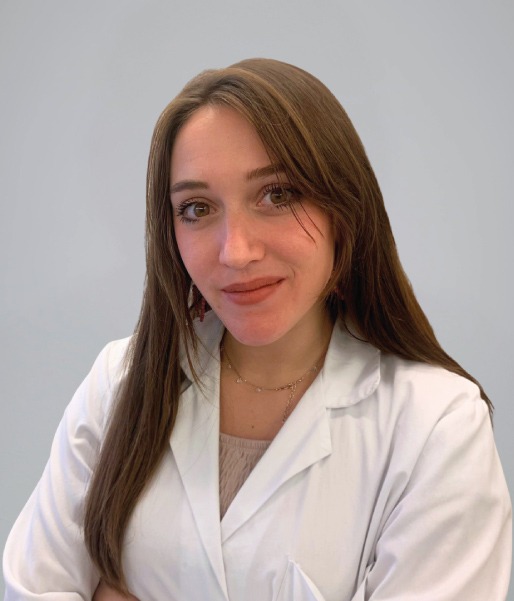
Professional profile
Chiara Stramba-Badiale trained at the University of Pavia and deepened her background in clinical neuropsychology through a master's programme at the Lombard School of Psychotherapy with a Cognitive-Neuropsychological orientation (SLOP). She is registered with the Order of Psychologists of Lombardy under number 23514.
Her professional work includes private practice, online consultations, and experience in structured settings such as Istituto Auxologico Italiano, where she also carries out research together with the assessment and rehabilitation of cognitive deficits in frail and post-stroke patients, with attention to psychological support, cognitive frailty, ageing, and rehabilitation.
She also collaborated on the Psicologo in Farmacia project in Milan and Varese and took part in groups with younger patients affected by eating disorders.
Academic work in psychology with a clinical focus and attention to care settings.
Advanced training at SLOP, with a specific focus on neuropsychological assessment, cognitive stimulation, and rehabilitation continuity.
In-person work at Studio Cardiologico Locati in Milan, online, and by phone, within a clinical frame designed to be clear and sustainable.
Work within structured contexts, with attention to the link between emotional wellbeing and cognitive functioning.
Professional path
Academic training in psychology together with openness to international contexts and different expressions of psychological distress.
Part of her academic training was completed at Universidad Complutense de Madrid.
Specific focus on neuropsychological assessment, cognitive frailty, and the tools used for assessment and stimulation.
Work with young adults, adults, and older adults, keeping in view both the symptom and the wider life context.
An updated and curious orientation toward innovative tools applied to neuropsychology and care.
Working style
The opening sessions are used to understand the problem, clarify the request, and define the form of work that may be most useful. The therapeutic relationship is built with clarity, steadiness, and shared understanding.